How Seattle Rain Damages Car Paint

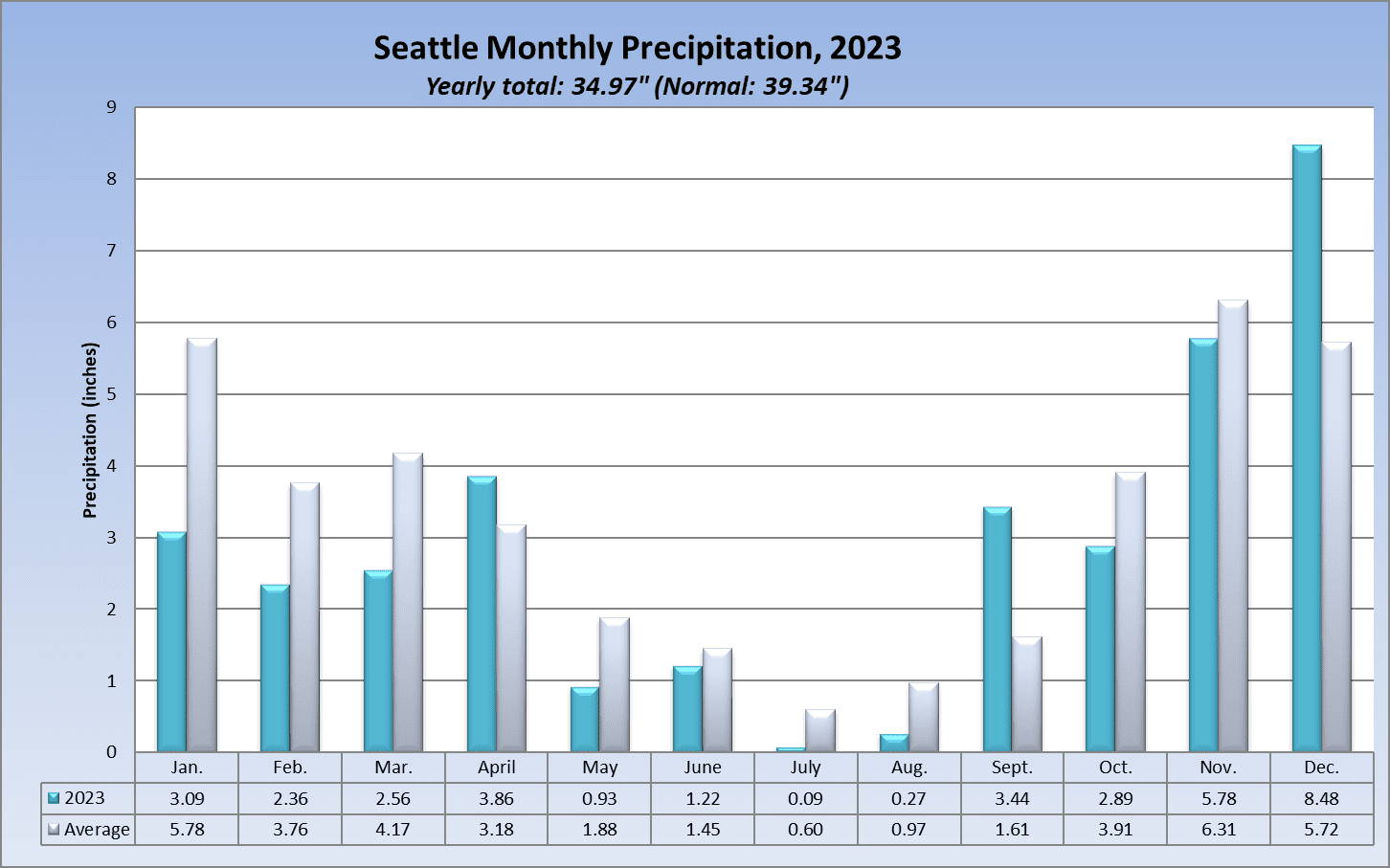
Seattle gets 155 rain days a year. Here's what that moisture is actually doing to your clear coat — and why wax can't stop it.

Seattle Gets 155 Rain Days a Year. Your Paint Gets Every One of Them.

Most Seattle drivers know the rain is constant. What they don't know is that rain isn't neutral — especially here. Pacific Northwest rainfall mixes with airborne pollutants from highway traffic, marine industry, and industrial corridors to form mildly acidic precipitation that chemically attacks automotive clear coat over time. It's not dramatic. It's cumulative. And it compounds everything else on this list.
What the Research Shows
Automotive clear coats are polymer networks — primarily polyurethane or acrylic-melamine — designed with a finite resistance to moisture. Chronic, sustained moisture exposure, especially when that moisture is chemically active, triggers hydrolysis: a chemical process that breaks apart the polymer bonds holding the clear coat together.
The acid rain mechanism
Normal rainfall has a pH around 5.6 — mildly acidic from dissolved carbon dioxide. But when rain passes through atmospheric pollution (sulfur dioxide from marine vessels, nitrogen oxides from traffic on I-5 and Highway 99, industrial particulates from Boeing Field) can fall as low as pH 4. At that acidity level, the rain that pools and evaporates on horizontal surfaces — your hood, your roof, your trunk lid — leaves behind concentrated acid deposits. The moisture evaporates. The acidity stays.
Progress in Organic Coatings (Bauer, 2000)
Research published in Progress in Organic Coatings (Bauer, 2000) documents the mechanism precisely: acid etch damage appears as irregularly shaped permanently etched areas, concentrating on horizontal surfaces where rain pools rather than runs off. The study notes that once the damage occurs, it is typically permanent — the polymer network has been chemically altered, not just contaminated.
Do you have to drive in the rain often?
Ceramic coating protects against damage. It bonds directly to your clear coat, repels water instead of letting it pool, and holds up for years where wax wears out in weeks.

Why Wax Can't Stop It

A wax layer is sacrificial. It sits on top of the clear coat and takes the first hit from sun, rain, road film, mineral deposits, pollution, and acidic moisture. That is its job. It is designed to slowly break down so the paint underneath does not have to take all of that punishment directly.

But in chronic Seattle rain, the wax is fighting a very different battle than it would in a sunnier, drier climate.
Instead Your Wax Stays Soaked
That matters because wax needs time and the right conditions to fully cure. When there is not enough dry time, warmth, or sunlight, the wax may never harden into the protective layer people imagine. A wax that has not cured properly can be porous from the beginning. It may still make the car look glossier for a while, and water may still bead at first, but that does not mean it is truly blocking acidic moisture from reaching the clear coat.
And even when wax does cure, sustained moisture wears it down faster.
Once that happens, acidic rainwater and contaminated moisture can reach the clear coat directly. That is where the real damage begins.

Clear coat is tough, but it is not invincible. It is still a surface layer. When acidic moisture sits on it repeatedly, especially without enough drying time between exposures, it can begin to chemically attack the surface. At first, this damage is subtle. But under the surface, the gloss is beginning to dull. Tiny defects form. The surface becomes less smooth, less reflective, and more vulnerable to the next round of rain.

The hydrolysis timeline

Nguyen et al. (2010) in Polymer Degradation and Stability traced the long-term effects of chronic moisture exposure on acrylic-melamine clear coat systems — the type used in most modern vehicle finishes. Progressive moisture ingress causes micro-delamination between the clear coat and base coat over months of sustained exposure, even at low temperatures.
The damage isn't visible in the early stages. By the time gloss loss is noticeable, the delamination has already been underway for some time.

Wax-Curing Issues in Seattle

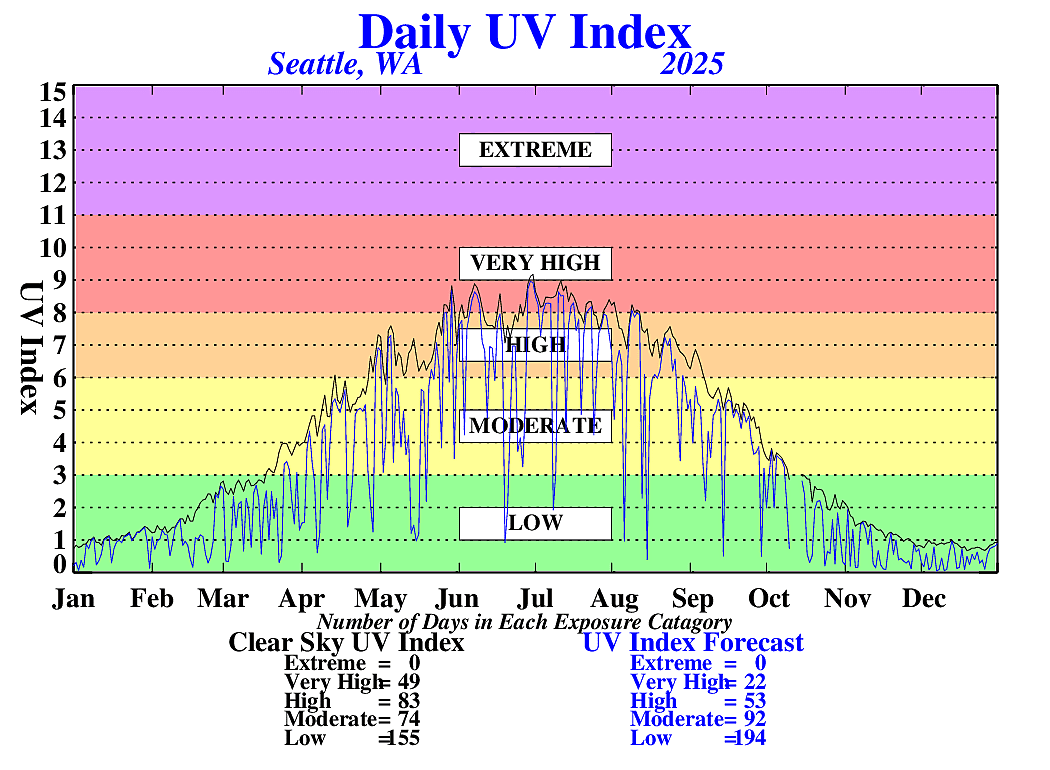
Wax cures through exposure to UV radiation. It cross-links into a protective barrier when UV energy is present at sufficient intensity over a sufficient number of days.
Seattle's UV index sits at 1–2 from October through April. Wax applied during this period — roughly seven months of the year — does not fully cure. It remains partially uncured, permeable, and structurally soft. The protective barrier that should repel moisture and acid is compromised before Seattle winter even starts.
What Ceramic Coating Does
SB3 Alpha ceramic coating creates a semi-permanent hydrophobic barrier that bonds at the molecular level with the clear coat. It is not a sacrificial wax layer — it does not break down under moisture, and its cure process is not UV-dependent.
The hydrophobic surface causes water to bead aggressively rather than pooling. Pooled water is what concentrates acid deposits when it evaporates. Water that beads and rolls off cannot concentrate. The chemical mechanism that causes acid etch — evaporation of acid-carrying moisture from a horizontal surface — is interrupted at the surface level.

SB3's chemical inertness means acid rain contacts a surface it cannot react with. The coating does not hydrolyze under moisture exposure the way polymer clear coat does. The clear coat underneath remains protected.

+

Days of Rain per Year
Home value is determined by factors like location, property condition.

~

Months Wax Can't Cure
Home value is determined by factors like location, property condition.

Explore More Ways
Seattle Damages Clear Coat

Seattle doesn't have dramatic weather. It has patient weather, which is worse for paint. 155 days of rain a year. A UV index too low to suppresses moss and bio-growth. Conifer sap dropping terpenes and rosin acids year-round. Marine salt aerosol off the Sound. All of these threats compound. Diamond Fox specializes in preventing it.
Conifer Sap
The PNW's conifer species drip resin year-round. Vehicles parked under or near these trees accumulate resin deposition that is genuinely continuous, and damaging to your vehicle's clear coat.
Airborn Fallout
Pollen is a seasonal but significant chemical threat. When pollen grains land on a vehicle surface and are exposed to moisture, they release mild organic acids, and biologically active compounds.
Freeze/Thaw Cycles
Automotive clear coat is a network of polymer. In the cold, this polymer contracts. Water trapped in micro-scratches will expand and freeze, damaging the surrounding clear coat structure.
Moss and Bio-Growth
Year-round conifer fallout and pollen give colonizing organisms their perfect food source. They live on your car's surface and create enzymes that degrade your clear coat's molecular structure.
Road Contamination
Road salt, primarily sodium chloride, with calcium chloride and magnesium chloride used as liquid pre-treatment and anti-icing agents, creates a corrosive brine when it contacts moisture.

Frequently Asked Questions

A great result starts with a clear understanding of the process. These are the questions clients ask most often before handing over their keys. We want you to feel informed, comfortable, and confident from the start.

Friction car washes (the kind with spinning brushes or fabric strips) introduce micro-scratches in the clear coat with each wash. Those micro-scratches create surface area for moisture and acid penetration, compounding the hydrolysis pathway rather than reducing it. Touchless washes are better mechanically but often use high-pH chemicals that strip any wax protection remaining on the surface. The cleanest maintenance option for an unprotected vehicle is a hand wash with pH-neutral products and no abrasive contact. Even then, you're cleaning, not protecting. The car goes back into the Seattle rain chemistry the moment it leaves the wash bay.

The hydrolysis mechanism doesn't require heavy rain. It requires sustained moisture contact. Light, persistent drizzle of the kind Seattle specializes in is actually the worst scenario, because the water sits on the surface without the runoff force of a heavy downpour. The acid chemistry concentrates as the droplets partially evaporate and re-wet as the next drizzle arrives. The light rain that defines Seattle's October through April is not less damaging than a storm. In terms of surface chemistry, it's more damaging per inch of precipitation.

Clear coat hydrolysis is invisible in its early and middle stages. The polymer network is degrading at the molecular level before any surface change is visible. By the time the finish looks dull, flat, or hazy, the damage has been accumulating for years. You're seeing the late-stage result of a process that started in year one. A car that "looks fine" after five Seattle winters has almost certainly accumulated meaningful hydrolysis damage that a paint thickness measurement and inspection under the right lighting would reveal. "Looks fine" and "is fine" are not the same statement about paint condition.

The sulfur dioxide (SO₂) that becomes sulfuric acid in rainwater is present throughout the atmosphere at low concentrations from vehicle exhaust, shipping, and regional industrial sources. Seattle's marine environment also contributes nitrogen oxides from maritime traffic. The acid forms in the atmosphere and falls with precipitation everywhere, not just in industrial zones. The concentration on your paint happens at the point of evaporation: as the water evaporates from the surface, the acid it carries concentrates in place. The source of the SO₂ doesn't need to be nearby. It just needs to be dissolved in the rain that falls on your car.

Water spots and hydrolysis damage are related but distinct. A water spot is a mineral deposit: the calcium and magnesium salts left behind when water evaporates from the paint surface. Water spots can often be removed with a detailing spray or a light polish if caught early enough. Hydrolysis damage is structural. The polymer crosslinks in the clear coat have been broken. The water spot sits on top of the paint. The hydrolysis damage is inside it. They frequently coexist because the same water events produce both, but treating the water spots doesn't address the underlying structural damage. If spots reappear faster and faster after polishing, the surface has progressive hydrolysis damage underneath.

Fresh mineral water spots can sometimes be removed with a distilled water flush and a microfiber wipe, or with a dedicated water spot remover product. Light mechanical polishing can remove spots that have etched slightly into the surface. None of these approaches address hydrolysis damage, which is structural. And polishing carries its own cost. Every polish removes a thin layer of clear coat. On a vehicle with five or more Seattle winters and no protective coating, that clear coat is already thinner than it was on delivery day. Polishing to address water spots without knowing the current clear coat thickness is a risk without a measurement.

Washing removes surface contamination, mineral deposits, and some acid chemistry before it can concentrate. For vehicles without protective coatings, regular washing is the only maintenance that slows acid accumulation. Yes, it helps. But it does not stop the hydrolysis mechanism. The water that causes the hydrolysis is the rain itself, not the grime on top of it. Washing more frequently slows the compounding of the problem. It does not address the mechanism.

At 69-85% relative humidity, the moisture in Seattle's air is sufficient to maintain a thin film of adsorbed water on paint surfaces continuously. This is not rain. It's the humidity itself. The acid chemistry that Bauer's research documented doesn't require standing water. It operates in the thin molecular water layer that forms on surfaces at high humidity. Seattle's non-rain days in winter still involve hours of high-humidity air contact with the paint surface. There is effectively no "dry day" break in the chemical exposure from October through April.
DIAMOND FOX AUTO DETAIL

Explore our Services

Not every car needs the same thing. Some need a detail, some need correction, some need protection that actually holds up in Seattle, and some need all three in the right order. Explore what each service actually does and which one fits your car.

Auto Detailing

$249 starting
Financing Available
Deep cleaning, surface decontamination, and paint care. Because your ride deserves to shine.

Ceramic Coating

$1,299 starting
Financing Available
SB3 molecular protection bonded to your paint, built for what the PNW actually does to the clear coat.

Paint Correction

$349 starting
Financing Available
Swirl marks and lost depth measured, corrected, and restored. Paint depth gauge before every job.

New Car Protection

$899 starting
Financing Available
Seattle starts damaging new paint immediately. Ceramic coating protects before damage starts.
OUR CORE VALUES

The right people find Jesse.

A lot of people are searching for a quick solution. But the people who value the outcome know the difference between average work and the right hands on the job. Most people find a service. The right people find Jesse.
Precision
Precision is built through thousands of careful decisions over time. It’s knowing what matters, what doesn’t, and where exactness changes everything. When the work is done with precision, the result speaks for itself.
Integrity
You should know exactly what you’re getting and why it matters. Integrity is about being transparent, straightforward, and committed to the truth of the work. No shortcuts, no surprises, just honest service from start to finish.
Attention
Great results don’t happen by accident. They happen because someone is paying attention. From prep to final inspection, every part of the process is watched closely. That care shows up in the finish, and the confidence clients feel when it’s done.
Permanence
Permanence means building something that endures. The goal is lasting protection, lasting beauty, and lasting peace of mind for the owner. When the work is done with integrity, the results don’t just impress. They stay. That’s the Diamond Fox Standard.

Elite Level Service.
Done Right. The First Time.

For a vehicle you've invested in, ceramic coating is what separates a finish that holds up from one that fades, dulls, and demands constant upkeep.
Located in West Seattle at
7919 29th Ave SW
West Seattle, WA 98126
By Appointment Only
© 2026 Diamond Fox Auto Detail LLC. All Rights Reserved
Secret Link